
How to Make $100 in 10 minutes

Jun
Introduction
This tutorial will be a bit different to the others… in the first part I will explain how to make $100 (it could be more or less) in under 10 minutes. In the second part, the advice for making this more profitable. Yes, we are carders here, so do not use your own money to gamble.
Part 1. Fibonacci Strategy: A Mathematical Betting System
In the world of casino betting systems, few strategies combine mathematical elegance with practical effectiveness quite like the Fibonacci sequence. This progressive betting system has gained remarkable popularity among sophisticated gamblers who appreciate its slower, more controlled progression compared to aggressive systems like the Martingale.
1.1. Understanding the Fibonacci Sequence
The Fibonacci sequence is a series of numbers where each number is the sum of the two preceding ones, creating a naturally progressive pattern that appears throughout nature, art, and mathematics.
Code: Select all
The Classic Fibonacci Sequence:
1, 1, 2, 3, 5, 8, 13, 21, 34, 55, 89, 144...
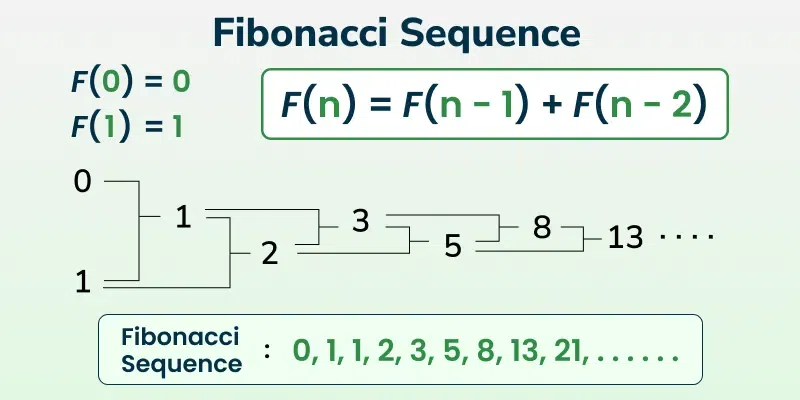
“Mathematical Advantage”: The Fibonacci strategy requires approximately a 38-40% win rate on even-money bets to break even over extended periods, which is achievable on games like roulette, baccarat, and certain blackjack situations. This contrasts favourably with purely luck-dependent systems.
1.2. Practical Example
For this tutorial, I applied Fibonacci to European roulette, with an initial budget of just £100. In the end, I made £28 profit (a 28% return in 7 minutes). Here are the tips for achieving this.
WARNING: This tutorial is for educational purposes only. Each person will decide whether to do it or not, as it is a fact that the casino’s house edge means that in the long run, the player always loses (at some point, the breaking point is reached). No system of equations, mathematics, or probability and statistics can beat the system… casino games are a system of chaos, where a very small percentage also plays “luck”.
But as I said at the beginning, we are carders here, so you’ve got nothing to lose by trying it using someone else’s CVV.
1.3. The Mathematics of Fibonacci in European Roulette:
Code: Select all
1, 1, 2, 3, 5, 8, 13, 21, 34, 55, 89, 144...
How it works: It is applied to “almost 50/50” probability bets. In European roulette (single zero), the bets that come closest are:
- Red/Black
- Even/Odd
- High/Low (1-18 / 19-36).
The probability of winning each one is 18/37 ≈ 48.65%. The house edge comes from the zero (0).
1.4. Mechanics of the Fibonacci System:
-> You start by betting the first unit in the sequence.
--> If you win: You recover your stake and a profit equal to that stake.
--> If you lose: You move forward in the Fibonacci sequence. Your next bet will be the next number in the sequence.
The goal is that, when you win, the profit from that spin covers the losses from the previous losing spins in the current sequence.
1.5. My Example
For this exercise, the initial capital was £100, and the most important thing is to set a target.
Targets for my case:
PRIMARY: Reach £50, withdraw the profit and leave the other £100 for another day.
This is only for a single roulette session of 25 spins and in under 10 minutes. If I reach 25 spins or the 10 minutes, I stop playing and withdraw the profit, EVEN if I haven’t hit the £50 target.
As you will see, I did not meet the £50 target. However, I stopped at spin 25 and with 7 minutes on the clock, which gave me a 28% profit. THIS is crucial: always set your casino targets and limits. Many players lose everything due to greed and addiction (yes, your brain gives you a lot of dopamine when you win and wants more and more until the bookmaker wins). So, I would recommend you follow my same strategy: £50 in just 25 spins and/or 10 minutes. If not, you withdraw whatever you’ve won and play another day.
As I only had £100, the unit was £2, a reasonable amount to start with. The sequence would be:
Code: Select all
$2, $2, $4, $6, $10, $16, $26, $42, $68...
One thing to bear in mind is, for the same session, only go for one colour, red or black. Do not change colours or numbers, stick with the same colour from bet 1 to 25, and just follow the Fibonacci strategy to the letter. Do not try to combine more strategies in a single session.
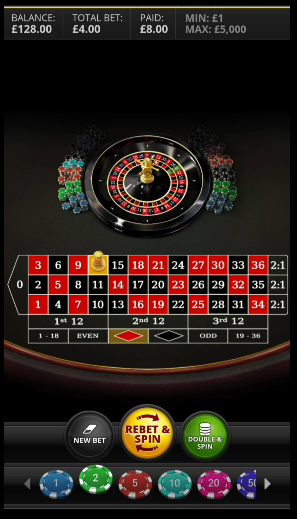
This is something that can happen: losing 10 or more bets in a row on European roulette:
Calculation:
Code: Select all
(19/37)^10 ≈ (0.5135)^10 ≈ 0.0013 or 0.13%
This means that, in any block of 10 consecutive spins you observe in roulette, there is a 0.13% probability that that specific block will be all losses. Since in a session you play 25 spins (my recommendation), you are actually creating 16 potential blocks of 10 spins. This makes the probability of encountering a streak of 10 losses in a 25-spin session significantly higher than 0.13%.
If you want to survive 10 consecutive losses, you need to have $286 to cover the losses + $110 for the 10th bet. That means you would need around $400 as your starting capital.
With only £100, we can actually collapse on bet number 8. Roughly 1 in every 60 sessions, we can end up at zero. This is the casino’s business; they know this, and that’s why the house always wins in the long run.
1.7. $100 a Day
If you later want to progress and win $100 in 10 minutes, then the new Fibonacci sequence would be with a unit of $5:
Code: Select all
$5, $5, $10, $15, $25, $40, $65, $105, $170, $275...
The critical breaking point, where the session could collapse, is at bet number 8. So your daily bankroll should be at least 10 times the total of the sequence you are willing to go through. If you plan a 7-step sequence (up to the $65 bet), the total staked in that sequence is $165. Therefore, a bankroll of $1,500 – $2,000 would be “safe” to absorb variance.
Goals and Limitations:
--> Daily Target: $100 (i.e., win 20 units).
--> Daily Stop-Loss (Loss Limit): $200 (40 units). If you lose $200, YOU LEAVE. No exceptions.
--> Withdraw IMMEDIATELY upon reaching $100. Do not say “just one more”.
That’s how simple, yet dangerous, the Fibonacci sequence is, so I wouldn’t recommend you use this method as a primary income, only do it to have “extra” money from carding.
Part 2: Carding + Casino
This is where carding comes into play… you won’t be using your own money to top up a casino account. On the contrary, you will open a crypto, Non-KYC casino account, fund your balance with a CC, and that’s it—you are ready to play roulette or blackjack using the Fibonacci system.
You are probably wondering: which casinos are the best, how to card them, which BINs to use, and most importantly, where to buy HQ CCs?
There exist further mathematical techniques and methods for roulette, but in my perception, these are not worthwhile; you should merely view them as a supplementary, rapid, and volatile source of income. Remember not to get carried away and to think with a cool head. If you do not, your casino balance will eventually break, and the odds of that happening are high, as the casino has a 2.4% advantage, which is a huge edge. They have an infinite bank, but we do not… not unless you are carding.